
.png)
In-Store Robots - Transforming Retail Experience
- Jan 4, 2023
- 6 min read
Technology is revolutionising our shopping experiences – from simple service kiosks to online and mobile shopping, to visiting store catalogues through augmented reality to the virtual installation of interior design in 3D modelled rooms.
Technology is combining the physical aspects of brick-and-mortar stores with digital experiences in more ways than we can imagine. Perhaps the next in-store digital revolution is a robot takeover.
When we think about robots in shopping, the first picture that comes to mind might perhaps be of a robot trudging along an endless warehouse aisle. Warehouse robot deployment has been on the rise for a while now. Amazon's recent deployment of 45,000 robots in their distribution centres is a major example of this shift. One might think that in-store requirements are so much more complicated than warehousing needs and as such in-store robots still have a long way to go before replacing human faces and hands in a store. This is true to a degree. In-store demands are complicated and still require major human involvement. But for how long? What are the in-store needs where robots can help enhance the shopping experience?
An estimate by market research firm ABI Research predicts that more than 150,000 robots will be deployed in retail stores by 2025. How does the post-covid economy influence this figure remains to be seen? But early indications suggest that stores will widely adopt more robotics considering the changes brought about by COVID-19.
EDEKA became the first supermarket chain in Germany to use humanoid robots as a direct response to deal with the COVID-19 emergency. Hence the deployment rate of humanoid robotics or in-store robotics, in general, maybe fast-tracked thanks to COVID-19 with more safety precautions being implemented, changes in customer behaviour, and financial concerns.
What can In-Store robots do?
They can do the obvious things that robots are good at doing, like, inventory management; cleaning up spills; and any mundane, repetitive work done by the store's human personnel. This can save time for the store staff to concentrate on other higher-level work. Then there is the In-Store work that has a uniquely human footprint: interacting with the customers. These kinds of jobs will involve customer service or even being a salesperson. In-store robots can in theory do so much more - they can analyse and even predict customer behaviour. The greatest challenge faced by such robotics is ensuring the highest quality customer experience.
What are Some of the In-Store Requirements Fulfilled by Robots?
Inventory Management
A recent report from the IHL group estimates that $1 trillion is lost worldwide every year due to inventory distortion. Inventory distortion is the money lost due to the combined cost of out of stocks, overstock, and lost sales. Many retailers consider inventory management to be a bare essential, mundane work. But the hidden opportunities in inventory management are enormous. This is where in-store robots can revolutionise retail. Inventory management takes up a lot of human hours which can also be saved by in-store robots.
Lowes has created a robot that is designed particularly for hardware stores. The LowesBot can manage the store’s inventory; provide directions to product locations within the hardware store; and can even give customers product insights or descriptions. This is one way in which hardware retailers can use in-store robots to eliminate the tediousness of mundane tasks.
Robots have been used in inventory management for a while now. Amazon's Kiva bots and the Bossa Nova robots at Walmart are some examples. Fetch Robotic's Tagsurveyor can scan up to a height of 25 feet. Zebra Technologies, the company behind the SmartSight EMA50 inventory management robot, claims that their robot can increase the available inventory by 95% and even save 65 hours of employee time.
Simbe Robotic's Tally is a fully automated robot that not only does basic inventory management, but it is also a complete shelf-auditing robot. Inventory management robots within Store must deal with an extra challenge: navigating aisles filled with customers. Tally overcomes this hurdle with the help of light detection and ranging or LIDAR. With the help of on-board sensors, cameras, computer vision, data mining, and algorithms, Tally manages a store's whole inventory. It can identify missing items, misplaced items, and analyse data to identify fast-moving items and slow-moving products.
Analysing customer behaviour and optimising inventory management will be a key focus area for future In-Store robotics solutions. There are even attempts to monitor customer emotions when they enter the store, leave the store, pick up a product from the store! These feedback mechanisms and data collection potential of in-store robots raise potential security issues but at the same time, provide the infinite potential to make shopping way much more personalised.
Service Robots
Most in-store robots can do basic inventory management, but they can also do a variety of tasks in addition to inventory management. Badger Technologies’ service robot Marty, for example, helps keep stores safe and clean. Marty identifies spills and other potential risks and hazards and alerts the store employees and get them fixed. Millie the safety robot deployed by Australian retailer Woolworths is a bit more advanced. It not only identifies spills and hazards; it fixes them instead of just alerting employees. Service robots thus save considerable employee time spent on looking for and fixing such service issues.
Customer Service
Perhaps the simplest form of the non-human customer service system in a store is a Kiosk. Well, what if the Kiosk is a robot? Instead of being a stationary non-intelligent kiosk, a mobile service robot can do so much more. In-Store robotics has become a testbed for robot-human interactions. They can answer simple customer questions, guide customers to the items they need, and even answer queries in multiple languages. Such customer service robots can save countless hours of human service personnel and help them focus on more complicated customer queries.
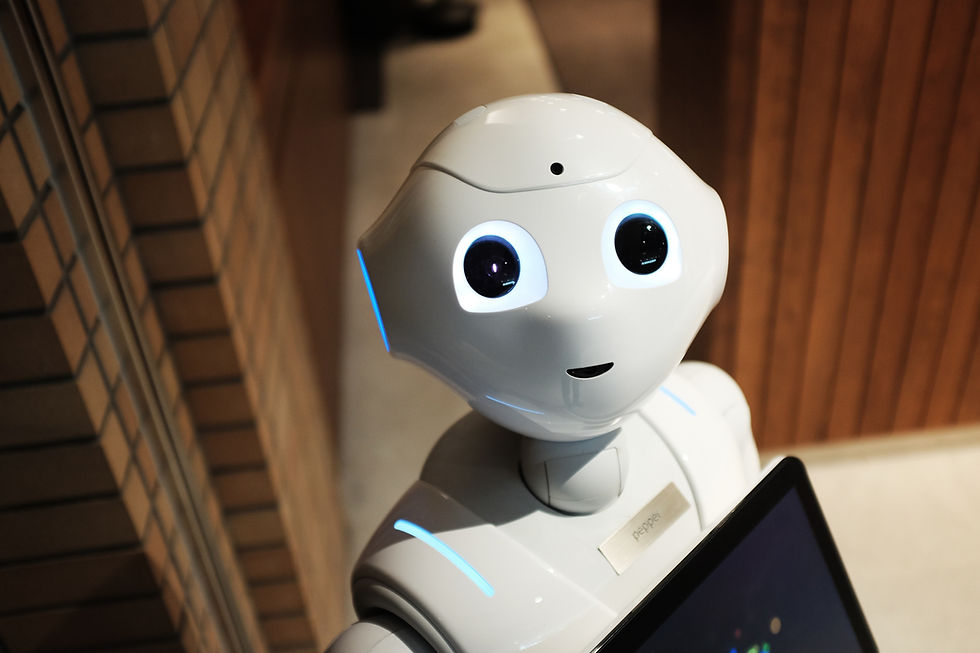
Pepper from Softbank Robotics is a famous example of such a robot that is specialised in direct robot-human connection. Pepper is used in many industries, including retail. Pepper is an anthropomorphic robot that can interact with customers. Pepper can play music, announce offers to customers and even guide customers to products. Its primary focus is on improving the emotional engagement of the customer. Whenever Pepper cannot address a customer's needs, the robot can guide the customer to a staff member. With its ability to interact with customers (and even take selfies!) Pepper is intended to provide a personalised shopping experience to customers.
Automated Checkouts
One aspect of shopping in a brick-and-mortar store that every customer hates is checkouts. Waiting in lines is not fun. Now with the new social distancing behavioural changes which are expected to last long term, any innovation in checkouts can vastly improve customer experience. This is exactly what is happening in retail. Self-checkout scanners have been there in retail for a while now. But these require active involvement from the customer with a high risk of a negative consumer experience.
Amazon is trying to solve this problem with its new cashier-less Amazon Go grocery stores. When a customer visits an Amazon Go store, all they need to do is to scan in using the Amazon Go app and they can proceed with their shopping. Cameras and sensors in the shop detect the items taken by the customer and add those items to their virtual card. This eliminates boring checkout lines.
There are other start-ups in the space trying to perfect the automatic check-out puzzle. A Silicon Valley start-up, named Garbango, offers something similar to other supermarket chains. They essentially digitise every item in the store and customers can scan and check out the items using the Garbango app on their mobile phone.
But such automatic checkout solutions require extensive infrastructural investment in cameras and sensors. AI-powered shopping carts are one of the proposed solutions to address this problem. So rather than equipping the entire store with expensive hardware, the shopping cart can be made smart, and anything put in the physical cart can be scanned and billed. Caper is a start-up that makes such an intelligent shopping cart. Another such attempt is the autonomous robotic shopping carts introduced by the Chinese supermarket giant 7Fresh. All the customer needs to do is to pair the mobile app with this robotic shopping cart. The shopping cart will then follow the customer around the store and items put inside the cart will be automatically checked out.
Conclusion
Retail was prime for an In-Store robot disruption even before the pandemic. But COVID-19 may have expedited this process. Companies have already started to adapt to this new reality: a case in point is the introduction of a smoothie making robot named Blendid by Walmart to offer customers a contactless alternative to a smoothie bar! Such innovations are expected to explode as our social behaviours and consumer needs have been altered perhaps permanently. In-store robotics offers so much more innovation potential when it comes to human-robot interaction and the possibility of optimising consumer-facing shopping experiences. So, the coming years may see some rapid growth in retail inventory management solutions, predictive modelling, automated checkouts, In-store holistic IoT solutions, and so much more. In-Store robots are here to stay.


Comments